Dance Party
Pragmatic Play takes the core mechanics of its earlier Extra Juicy title and reimagines it for a different audience. Rather than trading fruit symbols, this fresh iteration trades…

The numbers
RTP
95.5%
Volatility
High
Max win
x36450.00
Layout
5×3
Paylines
243
Bet range
0.2 – 100
Figures as published by Pragmatic Play, founded 2015, Malta. Operators may run a different RTP configuration — check in the game before you play.
About Dance Party
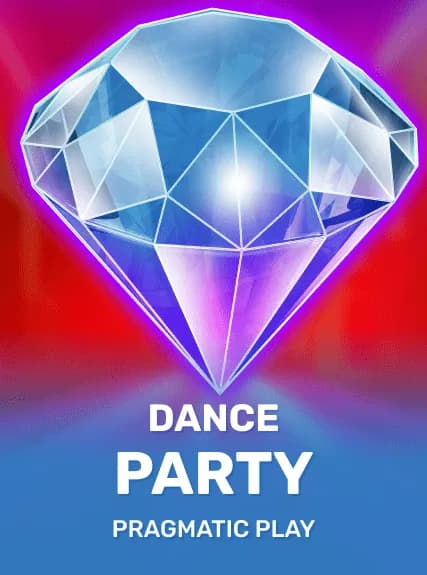
Pragmatic Play takes the core mechanics of its earlier Extra Juicy title and reimagines it for a different audience. Rather than trading fruit symbols, this fresh iteration trades that identity for a retro nightclub atmosphere centered on neon aesthetics and electronic culture. The developers stripped away the fruit imagery and layered on a disco-meets-modern sensibility, though the overall execution feels somewhat restrained. The audio, relying on what sounds like synthesized EDM production, adequately fills the soundscape without leaving much of an impression. Visually, the presentation does its job, providing a functional backdrop rather than a deeply immersive experience.
Gameplay and layout
Access to Dance Party follows Pragmatic Play's standard approach. Players configure their wager by selecting a bet level from one through ten, then choosing a coin denomination between 0.01 and 0.50, creating spin amounts ranging from 0.20 to 100. The game operates across five reels and three rows with 243 ways to win, meaning matching symbols need only appear on consecutive reels reading left to right to create a payout. The paytable extends the neon theme, with J-through-A symbols rendered as glowing fluorescent elements. Premium symbols consist of BAR variants, triple sevens, and a DJ symbol that serves as the highest-paying regular icon. Landing five DJ symbols awards 7.5 times the total stake. The game logo functions as a wild symbol appearing only on the middle three reels.
Math and performance
Pragmatic's volatility meter rates Dance Party at a full 5 out of 5, suggesting extended stretches of low returns interrupted by occasional larger payouts, particularly when bonus features activate. The return to player percentage stands at 96.50% on standard configurations, though individual casinos may offer alternative versions with lower percentages. This RTP sits well within industry standards, striking a middle ground that neither disadvantages players nor shifts the balance dramatically. The high volatility designation indicates that patience and sufficient bankroll become prerequisites for most sessions, with larger returns clustering around specific moments rather than distributing evenly.
Bonus mechanics and multiplier system
The progressive multiplier mechanism represents the centerpiece of Dance Party's design. A diamond symbol acts as the scatter, appearing anywhere on the grid. When five or more diamonds land simultaneously, they activate the progressive multiplier free spin bonus. During this feature, a multiplier counter increases with each spin regardless of whether that spin generates a win. The multiplier climbs toward a ceiling of thirty times the stake. Pragmatic introduced a significant twist compared to its predecessor. While five scatters launch the feature with the multiplier at one times, advancing by one per spin, landing six scatters starts the feature at two times with increments of two. Seven or more scatters begin at three times, climbing by three per spin. This escalation system means reaching the maximum multiplier becomes substantially quicker with additional scatters beyond the minimum. During free spins, if five additional diamonds appear, the feature awards fifteen additional spins, stacking toward a maximum total of sixty spins. The game also includes a minimum win guarantee: should the free spin feature conclude with winnings beneath ten times the stake, the game automatically adjusts the payout to guarantee that ten-times minimum.
Realistic potential and performance expectations
The maximum win of 36,450 times the stake advertised on promotional materials inevitably raises skepticism. Pragmatic has history with publishing theoretical maximums that strain credibility, and casual observation might suggest Dance Party follows that pattern. However, examining the mathematical framework reveals the potential carries legitimate foundation. The thirty-times multiplier multiplied by reasonably strong returns on high-value symbols creates sufficient multiplication to approach that ceiling figure. While hitting such maximums remains extraordinarily rare, the underlying math suggests pathways toward those upper ranges rather than impossible-to-reach figures. Actual play tends toward something less dramatic. Free spin rounds frequently produce moderate returns even with the multiplier operative, which appears intentional from a payout perspective. The game's algorithm likely weights the feature's baseline win frequency lower, accounting for the outsized multiplier when calculating overall payout distribution. Watching the multiplier tick upward provides entertainment value, though expectations should remain grounded in statistical reality.
Theme and atmosphere assessment
Despite the neon framing, Dance Party never quite achieves the level of thematic immersion that stronger casino game design manages. The disco backdrop exists primarily to justify aesthetic choices rather than creating a cohesive experience that draws players into a distinct world. Pragmatic appears to have relied primarily on the multiplier mechanics and raw potential to drive interest, accepting that the presentation would serve as decoration rather than destination. Yet the game does nothing particularly unexpected with its chosen theme. Competing titles have explored retro club environments more thoroughly and created more engaging atmospheres. The execution here feels competent but conservative.
Final assessment
Dance Party occupies an interesting position between refinement and recitation. Pragmatic took an existing proven mechanic, modified it to enhance its appeal, and wrapped it in a theme that works adequately. The progressive multiplier system does represent advancement through the implementation of scaling multiplier increments tied to scatter quantity. Players chasing high volatility and bonus-heavy potential will find legitimate appeal here. The adjusted multiplier mechanics do create quicker paths to maximum status compared to standard implementations. The minimum payout guarantee during free spins provides a protective floor that reduces catastrophic downside risk. Yet beneath these technical refinements and the polished neon presentation, the game ultimately recycles established patterns rather than breaking new ground. Casino streamers and high-stakes players fascinated by extreme volatility and the pursuit of maximum theoretical returns will gravitate toward Dance Party. For those seeking rich thematic experience or innovative feature design, the offering presents as more derivative than distinctive. The game works competently within its design parameters and delivers on what it promises, operating within familiar boundaries rather than challenging conventions.
Dance Party — common questions
What is the RTP of Dance Party?
Dance Party has a return to player of 95.5%, as published by Pragmatic Play. RTP is a long-run average across millions of spins, not a guide to any single session.
Is Dance Party high volatility?
Dance Party is a high volatility slot. Wins land less often but pay more when they do, which is what makes it a common bonus hunt pick — and what makes the swings wide.
What is the maximum win on Dance Party?
The maximum win is x36450.00 your stake. Reaching it is rare by design — treat it as the ceiling of the maths, not an expectation.
Can I track Dance Party in a bonus hunt?
Yes. Dance Party is in the CasinoHub slot database, so it can be added to a hunt by name, and the tracker carries its figures into your break-even and required-multiplier maths automatically.