Bow of Artemis
Pragmatic Play's approach to cluster-based mechanics finds expression through Bow of Artemis, a July 2024 release drawing thematic inspiration from ancient Greek mythology without leaning heavily into narrative.

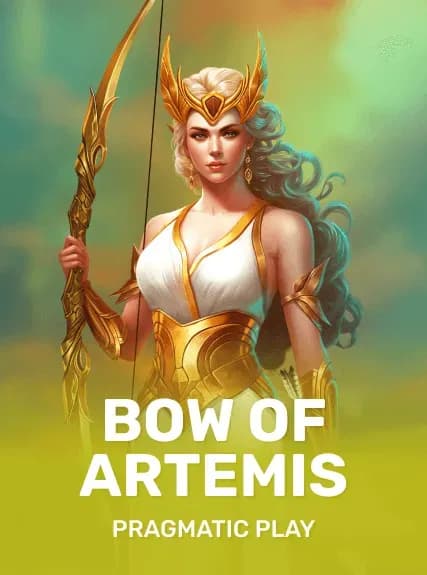
The numbers
RTP
95.02%
Volatility
High
Max win
x10000.00
Layout
8×8
Bet range
0.2 – 240
Figures as published by Pragmatic Play, founded 2015, Malta. Operators may run a different RTP configuration — check in the game before you play.
About Bow of Artemis
Pragmatic Play's approach to cluster-based mechanics finds expression through Bow of Artemis, a July 2024 release drawing thematic inspiration from ancient Greek mythology without leaning heavily into narrative. The goddess herself, historically associated with hunting prowess, wild animals, vegetation, and childbirth, provides atmospheric framing rather than story substance. While mythological references occupy their expected design real estate, the genuine mechanical depth emerges through how individual systems layer and build across extended play sessions.
The visual presentation positions the deity prominently along the screen's right margin, a design choice inherited from contemporary releases. An autumnal forest environment surrounds the core playing surface, rendered predominantly in warm reddish and golden tones that evoke late-season woodland atmosphere. The aesthetic maintains functional clarity rather than pursuing excessive ornamentation, prioritizing gameplay legibility and interface transparency.
Gameplay and layout
The foundational architecture operates across an eight-by-eight grid where winning combinations form through adjacent symbol clustering rather than traditional payline navigation. Minimum cluster requirements stand at five matching symbols connected horizontally, vertically, or diagonally. The symbol palette divides between two distinct compensation tiers. Standard playing card ranks occupy lower value positions, while imagery including deer, wolves, and bears populate the premium tier. Payout structures scale proportionally with cluster magnitude, beginning at 0.1 times the wager for five-symbol clusters and extending through intermediate ranges of 5 to 50 times stake for mid-sized clusters. Maximum clusters containing twenty-five or more identical symbols generate payouts spanning 50 to 1000 times the original stake. Wild symbols function as universal substitutes, capable of generating independent winning combinations or creating multiple simultaneous wins within cascade sequences.
Return profiles and volatility dynamics
Pragmatic Play offers three distinct return-to-player configurations accommodating operator preferences. The primary implementation delivers 96.05% theoretical return, representing optimal player value. Alternative settings provide 95.02% and 94.05% options for regional customization. Players electing to purchase immediate bonus feature access encounter a marginally reduced return of 96.02%. The high volatility classification reflects substantial variance between win frequency and individual win magnitude. Regular-game winning spins arrive with statistical consistency approximately every 4.27 spins. Bonus feature triggering proves considerably more elusive, with players statistically encountering qualifying conditions approximately once every 213 spins. Maximum theoretical prizes reach 10,000 times wagered amounts, though mathematical probability of achieving such extremes remains extraordinarily low. Betting parameters span from modest minimums of 20 cents through premium maximums of 240 currency units per spin.
Mechanical foundations and modifiers
The tumble mechanic serves as the operational bedrock supporting cascade sequences. When winning clusters form, involved symbols vanish from the grid while remaining symbols fall downward. New symbols cascade from above, potentially forming fresh winning combinations. Should novel clusters emerge, tumbling repeats automatically until achieving stable grid states. Overlaying this mechanic sits a color-coded modifier system. Brown markings trigger The Chase Begins, clearing all grid symbols and introducing entirely fresh symbol populations. Teal indicators activate Wild Pack, converting every grid instance of a randomly-selected symbol type into wilds simultaneously. Purple zones award Big Game Hunter, placing two-by-two symbol blocks at random positions. Red markings trigger Colossal Game, adding larger blocks measuring three-by-three, four-by-four, or five-by-five dimensions. Blue marks activate Lucky Wilds, inserting five to fifteen random wild symbols across the grid. Green markings trigger Power, introducing ten to thirty copies of randomly-selected pay symbols throughout the playing surface.
The Hunt progressive feature
The Hunt functions as the centerpiece bonus mechanism, employing symbol collection metrics to trigger escalating feature levels. Winning symbol clusters continuously populate an accumulation meter throughout both base game and bonus play. Upon reaching specific thresholds, The Hunt commences at Level 1 with a base multiplier of one times all wins. Initial triggering requires collecting 105 accumulated symbols. Exceptional accumulation during the triggering spin enhances starting multipliers. Collection of 130, 155, or 185 symbols during that immediate spin elevates entry multipliers to two, three, or five times respectively. The bonus divides into five ascending levels, each presenting progressively higher symbol requirements for advancement. Level 2 demands collecting 140 symbols during Level 1, with typical advancement granting plus-one multiplier increments. Exceptional collection at 165, 190, or 220 symbols grants multiplier bonuses of plus-two, plus-three, or plus-five. Subsequent levels follow comparable escalation patterns. During active bonus play, all six modifiers appear exactly once per level in fixed sequence. Bonus sequences conclude when accumulated symbols fall short of advancement requirements or upon completing all modifiers through Level 5. Direct feature purchasing costs exactly 100 times the current wager, bypassing symbol accumulation and providing immediate Level 1 entry.
Design philosophy and positioning
Bow of Artemis inherits mechanical frameworks emphasizing symbol collection progression coupled with escalating feature tiers. Pragmatic Play implemented distinct modifications differentiating this release from earlier iterations. The Green Power modifier represents a novel addition absent from foundational predecessors. Collection thresholds determining feature triggering and level advancement underwent recalibration throughout the structure. These adjustments maintain mechanical coherence while creating distinct gameplay experiences within the cluster-pays category. Whether Bow of Artemis warrants individual attention depends substantially on existing player preferences. Those specifically drawn to cluster-pays mechanics with symbol collection progression encounter a competent, refined implementation featuring adequate mechanical complexity and meaningful variation. The 10,000 times stake maximum aligns with contemporary high-volatility expectations. The expansive eight-by-eight grid provides substantial symbol interaction space, increasing probability of organic cluster formation during regular play. Players comfortable with grid-based mechanics and progressive feature escalation will encounter familiar design patterns refined through iterative improvement. The game positions itself as a solid contemporary addition to modern release catalogs, offering neither pioneering innovation nor substantial reimagining of established frameworks.
Bow of Artemis — common questions
What is the RTP of Bow of Artemis?
Bow of Artemis has a return to player of 95.02%, as published by Pragmatic Play. RTP is a long-run average across millions of spins, not a guide to any single session.
Is Bow of Artemis high volatility?
Bow of Artemis is a high volatility slot. Wins land less often but pay more when they do, which is what makes it a common bonus hunt pick — and what makes the swings wide.
What is the maximum win on Bow of Artemis?
The maximum win is x10000.00 your stake. Reaching it is rare by design — treat it as the ceiling of the maths, not an expectation.
Can I track Bow of Artemis in a bonus hunt?
Yes. Bow of Artemis is in the CasinoHub slot database, so it can be added to a hunt by name, and the tracker carries its figures into your break-even and required-multiplier maths automatically.