Big Bounty Bill
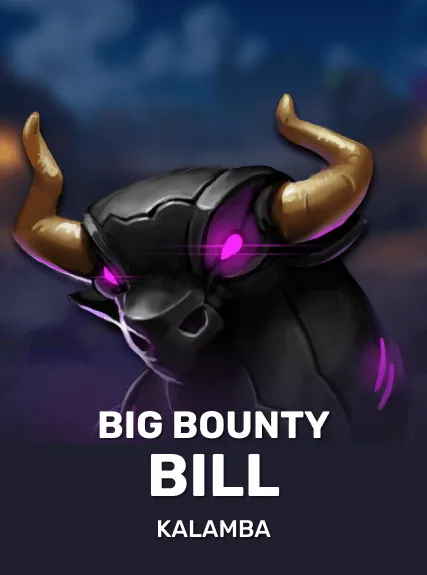
Big Bounty Bill, developed by Kalamba Games, takes the Old West setting and transports it into a sci-fi frontier environment.

The numbers
RTP
97.33%
Volatility
High
Max win
x5000.00
Layout
5×4
Paylines
1024
Bet range
0.3 – 300
Figures as published by Kalamba Games, founded 2016, Malta. Operators may run a different RTP configuration — check in the game before you play.
About Big Bounty Bill
Big Bounty Bill, developed by Kalamba Games, takes the Old West setting and transports it into a sci-fi frontier environment. This concept of blending period aesthetics with futuristic technology creates a unique visual identity that stands apart from the typical slot machine lineup. The game presents a frontier town backdrop complete with distant sci-fi architecture and twin moons overhead, establishing an atmosphere that feels both vintage and advanced without veering into pure science fiction territory. The visual presentation works well, offering enough distinctive character to catch a streamer's attention during gameplay sessions. Kalamba has built something visually coherent here, avoiding the trap of clashing design elements that can undermine thematic consistency. There are few other titles attempting this particular collision of old and new aesthetics, making the presentation feel relatively fresh.
Gameplay and layout
The reel configuration starts at five by four symbols, but three additional rows sit beneath blocking tiles that can be progressively removed. Initially, the game operates with 1,024 win ways, though this number transforms dramatically as tiles clear and the grid expands toward its maximum 16,807 combinations. Players familiar with other Kalamba releases such as Doctor Electro will notice similar structural design choices, particularly in how the blocking mechanism and expanding grid work together. However, Big Bounty Bill operates independently rather than as a derivative product, establishing its own gameplay identity despite these technical similarities. The core appeal for streamers lies in watching the grid evolve during active play, as clearing blockers creates visual progression and opens new winning opportunities that build tension across multiple spins.
Betting options and return mechanics
The betting range spans from 30 pence or cents up to 300 per spin, accommodating both conservative and aggressive betting strategies. This represents an unusual progression rather than the standard doubling patterns found in many slots. The game boasts a return to player rate between 97.33 and 97.98 percent when Hyperbonus features are active, positioning it favorably within Kalamba's broader portfolio. However, volatility sits at a notably high level, meaning players should expect extended dry spells alongside significant swings in account balance. Sustained play requires meaningful feature activation to maintain session viability, rather than relying on baseline symbol combinations. The hit frequency of 27 percent indicates that winning spins occur regularly enough to keep engagement high, though individual payouts during the base game tend toward modest amounts that fail to generate momentum without expanded grid conditions.
Symbol structure and pay mechanics
The paytable begins with card royals nine through ace, followed by thematic symbols featuring animals and characters from the frontier setting. A horse and bull occupy mid-tier positions, while villain characters make up the higher-value symbols. These antagonists include a female villain, a male villain carrying a firearm, and another male villain with a cigar who presumably represents Bill himself. The cigar-smoking villain delivers the strongest base payout at 3.3 times the wager for five of a kind, though this amount proves underwhelming without grid expansion and the accompanying increase in available win ways. Card royals require three matching symbols to generate payouts, whereas picture symbols need only two matches to trigger wins. A wild symbol appears infrequently and substitutes for all standard symbols except the expansion tiles and bonus indicators, limiting its utility compared to wilds in other slots.
Feature mechanics driving gameplay
Expansion symbols function as the primary mechanic for unlocking the game's latent potential. When these symbols land, they shoot at the blocking tiles stationed above the playing area. The progression works on a staggered system: the bottom blocker can be hit once, the middle requires two hits, and the top demands four hits before removal. Landing three, four, or five expansion symbols during a single spin awards three, five, or seven hyperspins respectively. During these hyperspins, any previously damaged blocker tiles disappear, revealing hidden positions underneath. As new expansion symbols continue landing, each cleared tile grants an additional hyperspin, creating a cascading effect that can extend the feature considerably. The grid can reach its maximum configuration of five rows by seven columns, unleashing all 16,807 possible win ways. Bonus symbols featuring a sheriff character trigger eight free spins when three or more appear, and these free spins operate identically to hyperspins, allowing the same blocker-clearing mechanics to unfold. Beyond standard triggers, players can purchase hyperspins directly using the Hyperbonus button, choosing from preset options delivering eight, fifteen, twenty, or twenty-five spins at costs of forty-five, 107, 164, or 229 times the active wager. This purchase mechanism enables immediate feature access without waiting for organic symbol combinations, though the highest tier presents an exceptionally steep price point relative to standard industry practice.
Realistic assessment of slot quality
Big Bounty Bill occupies middle ground within the broader slot ecosystem. The visual design and thematic execution deserve recognition as genuine strengths, creating a playing environment that maintains visual interest across extended sessions. Few comparable titles employ this particular aesthetic fusion successfully. Beyond appearance, the high return to player rate and feature-rich mechanics suggest reasonable long-term viability for session play. Symbol hit frequency prevents extended dead zones from occurring too frequently, maintaining engagement rhythm. Nevertheless, the overall mathematical construction and gameplay flow lack distinction, producing an experience that feels functional rather than exceptional. The most frequently appearing high-value symbol during testing proved to be the cigar-smoking villain, which makes mathematical sense given his superior payout structure, yet even his generous rates fail to generate substantial returns in isolation. Only when the grid fully expands and win ways multiply dramatically do these payouts achieve meaningful proportions. The maximum theoretical win reaches 5,000 times the staked amount, which represents solid upside potential albeit not exceptional given the game's extreme volatility and the expanded 16,807 possible combinations. Kalamba's bonus purchase pricing warrants criticism, as the maximum expense of 229 times the wager ranks among the industry's steeper premiums for feature access. Streamers will find technical competence in the graphics and audio production, yet the underlying mechanical design lacks the innovation or reward structure that generates memorable sessions. The game functions adequately for content generation purposes, delivering visual variety and feature triggers, but it falls short of becoming a standout title that viewers seek out specifically for entertainment value or exceptional win potential.
Big Bounty Bill — common questions
What is the RTP of Big Bounty Bill?
Big Bounty Bill has a return to player of 97.33%, as published by Kalamba Games. RTP is a long-run average across millions of spins, not a guide to any single session.
Is Big Bounty Bill high volatility?
Big Bounty Bill is a high volatility slot. Wins land less often but pay more when they do, which is what makes it a common bonus hunt pick — and what makes the swings wide.
What is the maximum win on Big Bounty Bill?
The maximum win is x5000.00 your stake. Reaching it is rare by design — treat it as the ceiling of the maths, not an expectation.
Can I track Big Bounty Bill in a bonus hunt?
Yes. Big Bounty Bill is in the CasinoHub slot database, so it can be added to a hunt by name, and the tracker carries its figures into your break-even and required-multiplier maths automatically.